Opens in a new tab

Technical resource

Unitree Robot Comparison

Humanoids and quadrupeds: compare mechanical capabilities, on-board computing and connectivity to choose the right platform for your industrial needs.

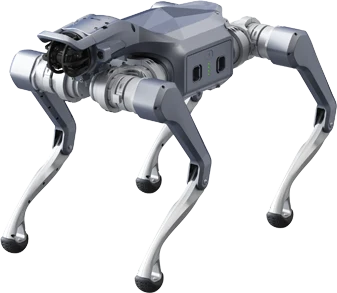
Our robot comparison covers two families of robots and two ways of using them. Read it by family: humanoids for dexterity and interaction, quadrupeds for all-terrain mobility and payload.

Humanoid
Quadruped

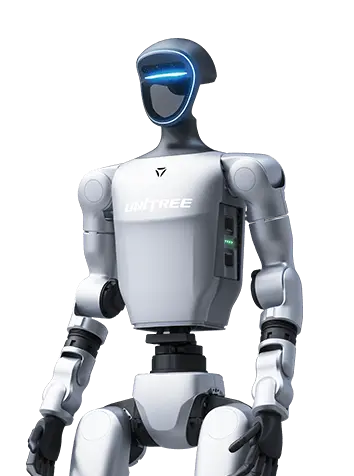
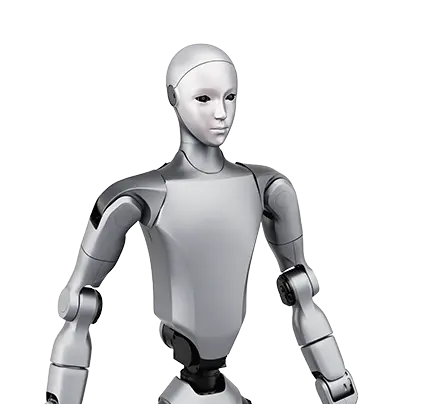
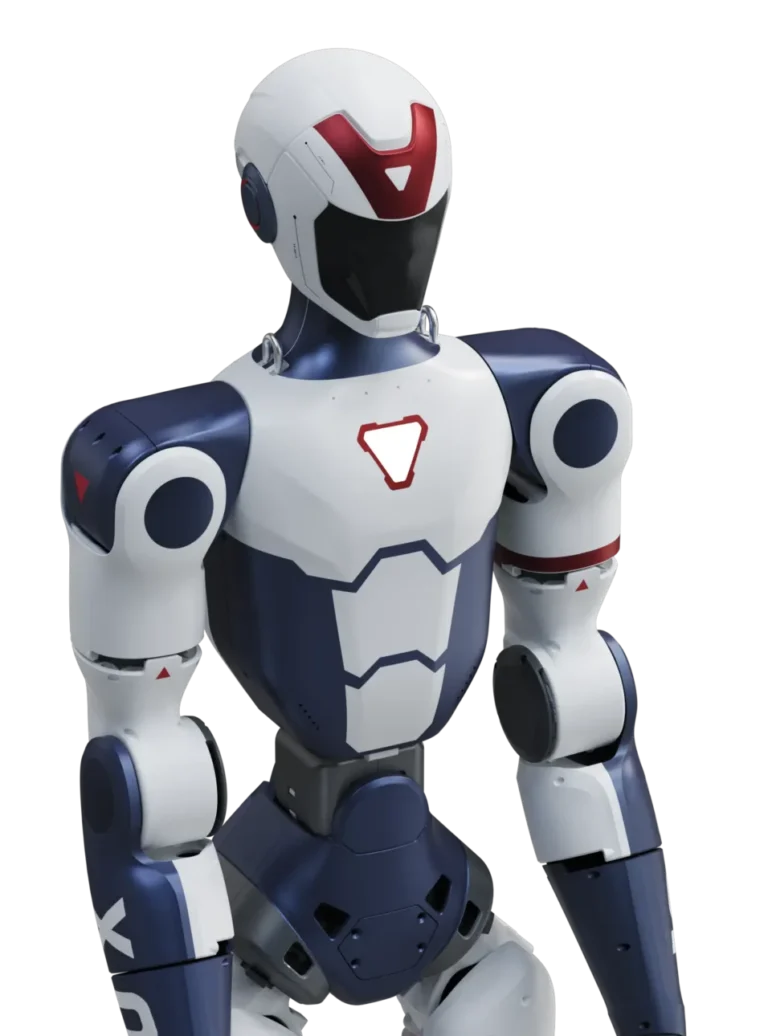
Humanoids

R1 · G1 · H2 — dexterity, interaction and manipulation
Feature
Overview
Type
Bipedal humanoid
Bipedal humanoid
Bipedal humanoid
Mechanical capabilities
Height
≈ 1.20 m
≈ 1.27 m
≈ 1.80 m
Weight
≈ 25 kg
≈ 35 kg
≈ 70 kg
Degrees of freedom
26
23 to 43
30+
Manipulation
2 arms + dexterous hands (opt.)
2 arms — heavy payload
Walking speed
≈ 1.5 m/s
≈ 2 m/s
high
Battery life
≈ 2 h
≈ 2 h
≈ 2 h
Compute & perception
On-board computing
Multi-core CPU + AI module (opt.)
8 cores + NVIDIA Jetson Orin NX (opt.)
High-capacity NVIDIA GPU (opt.)
Perception
Depth camera
3D LiDAR + RGB-D camera
LiDAR + cameras
Connectivity
Wireless
Wi-Fi 6 + Bluetooth
Wi-Fi 6 + Bluetooth
Wi-Fi + BT + 4G/5G (opt.)
Wired interfaces
USB-C, Ethernet
USB-C, Ethernet
USB-C, Ethernet, RS-485
Teleoperation
App + remote control
App + control station
Positioning
Typical use case
R&D, interaction, POC
Handling, inspection
Heavy tasks, industry
AI performance (TOPS)
≈ 100 TOPS (opt. module)
100 TOPS (Jetson Orin NX, opt.)
up to 2070 TOPS (opt.)
Ingress protection (IP rating)
Not rated — indoor/sheltered use

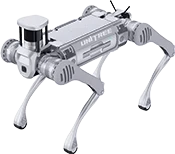
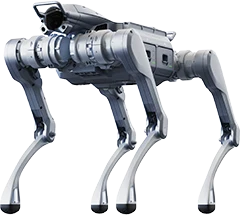
Quadrupeds

Go2 · B2 · A2 · As2 — all-terrain mobility and payload
Feature
Robot quadrupède Unitree Go2Go2 / Go2-WIdéfixView specs →
Robot quadrupède industriel Unitree B2B2RintintinView specs →
Overview
Type
Quadruped (legs or wheel-legs on W)
Industrial quadruped
Mechanical capabilities
Weight
≈ 15 kg (W: ≈ 19 kg)
≈ 60 kg
≈ 37 kg
≈ 18 kg
Payload
≈ 8 kg (W: ≈ 10 kg)
≈ 40 kg
≈ 25 kg
≈ 15 kg
Top speed
≈ 3.7 m/s (W: faster on wheels)
≈ 6 m/s
5 m/s
≈ 5 m/s
Battery life
2 to 4 h
4 to 5 h
2 to 4 h
≈ 4 h
Locomotion
Legs (W: legs + wheels)
Legs
Legs
Legs
Ingress protection (IP rating)
Not IP-rated — splashes
IP67 — dust + temporary immersion
IP66 — dust + powerful water jets
IP54 — limited dust + splashes
Compute & perception
On-board computing
8 cores + Jetson Orin Nano/NX (opt.)
NVIDIA Jetson Orin NX — up to 2 modules (opt.)
NVIDIA Jetson Orin NX (opt.)
8 cores + NVIDIA Jetson Orin NX (opt.)
Perception
4D LiDAR (Pro) + cameras
LiDAR + cameras
LiDAR + cameras
64–128-line industrial LiDAR + HD camera
Connectivity
Wireless
Wi-Fi + BT, 4G (opt.)
Wi-Fi + BT, 4G/5G
Wi-Fi + BT, 4G/5G
Wi-Fi 6 + BT 5.2, 4G (opt.)
Wired interfaces
USB, Ethernet
USB, GbE Ethernet
USB, GbE Ethernet
GbE Ethernet, SBUS
Teleoperation
App + remote control
App + control station
Remote control included
Positioning
Typical use case
Inspection, surveying, mixed terrain (W)
Construction, heavy loads
Industrial, HSE
R&D, inspection, training
AI performance (TOPS)
40–100 TOPS (Orin Nano/NX, opt.)
100–200 TOPS (1–2× Orin NX)
up to 100 TOPS (opt.)

Understanding TOPS: how much AI power for which use?

TOPS (Tera Operations Per Second) measures on-board AI computing power: the higher it is, the more the robot can analyse by itself, without relying on the cloud or network coverage. Orders of magnitude:

< 10 TOPS — Teleoperation

The robot is controlled remotely and streams video; analysis happens on the operator's side or in the cloud.
Example: teleoperated video patrol on a construction site, with the operator checking the images live.

≈ 40 TOPS — On-board perception

Real-time obstacle and person detection, target tracking, simple autonomous patrol.
Example: night patrol with on-board intrusion detection, alert sent to the monitoring centre.

≈ 100 TOPS — Multi-task AI vision

Jetson Orin NX level: several AI models running simultaneously, with no cloud — autonomous navigation + defect detection + thermal reading.
Example: autonomous HSE inspection of a site with no network coverage.

≈ 275 TOPS — Advanced autonomy

Jetson AGX Orin level: dense SLAM, multi-sensor fusion and on-board vision-language models.
Example: a mission lasting several hours in an unknown environment, with analysis and decisions made entirely on board.

Decoding the IP rating (ingress protection)

The IP rating has two digits: the first rates protection against dust (6 = fully dust-tight), the second against water (5 = water jets, 6 = powerful jets, 7 = immersion for 30 min at 1 m). In practice: a B2 rated IP67 works in driving rain and can cross a ford; an A2 rated IP66 withstands rain and jet washing; a robot without an IP rating is for sheltered environments only.

ℹ️ Indicative data — manufacturer specifications change regularly. DART SOLUTIONS confirms the exact specifications and recommends the best model for your use case and your payload, autonomy and connectivity constraints.

Let's talk about your project

A fleet to supervise, a use case to explore? Write to us at services@dartsolutions.tech.